
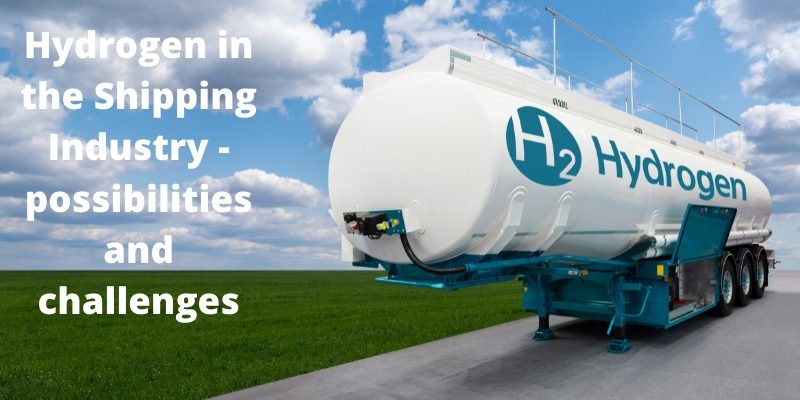
Part 1: About Hydrogen – Basics, Opportunities, and Challenges
Of late, hydrogen has been generating quite a buzz in the energy sector with its possibility as a clean source of energy. The shipping sector is not untouched, and this article explores the possibilities of using hydrogen in various ways to transition the move of the shipping industry to cleaner fuels.
Why Hydrogen?
The shipping industry contributes to 3% of global emissions, and to cut down on these emissions, it is important to switch to cleaner sources of energy. Ships require high power to propel them, and the alternative technologies of wind and solar energy are not sufficient enough to power big cargo ships, as they require high deck space which is simply not available on a ship.
Batteries can be another alternate means of powering. However, with current battery technology, just too many batteries will need to be carried in order for the vessel to go on a long haul. Battery technology can currently be utilized only on small-sized boats and crafts.
With the limitations present with other alternative technologies, can Hydrogen, with its high energy density and zero-emission when burned (it produces water as a by-product) prove to be a viable means to achieve cleaner shipping?
Hydrogen: properties
Let’s first talk about some basic properties of hydrogen.
- It is colorless, odorless, tasteless, and non-poisonous
- It has a high energy content per unit weight (almost three times as much as gasoline). One kg of Hydrogen can produce the same amount of energy as 3.2 kg of gasoline.
- Its energy density per unit volume is about a quarter of gasoline. This necessitates that it be compressed and used as a liquid to make the volume energy density higher.
- It is highly flammable – high safety standards need to be maintained during its storage, transport, and usage.
Green vs Blue Hydrogen
Strictly speaking, Hydrogen can’t be called a fuel as it is not found in its natural state but has to be manufactured. There are two ways of doing it: one by electrolysis of water, and the other by burning fossil fuels through a process called methane reformation. If fossil fuels are burned to produce Hydrogen, it can’t really be called a green fuel – it is just shifting the location of emission. Hydrogen produced this way is called ‘blue hydrogen’. If electrolysis is being used, and the electricity is being produced using renewable sources, then the produced hydrogen is clean and called ‘green hydrogen’.
The current dominant method of commercial production of hydrogen is by burning fossil fuels, and so it can’t really be called a clean fuel. If there’s a commercially viable method for mass production of hydrogen using electrolysis (which is clean), then Hydrogen can become an unparalleled clean fuel.
Advantages
- Abundance – Hydrogen is the most abundant element in nature. The entire world can be powered by hydrogen and we’ll never run out of it.
- Versatility – hydrogen can be used to power vehicles, for energy storage, domestic heating, and industrial use.
- Zero emissions – hydrogen when produced using electrolysis by renewable sources of energy, leads to zero emissions in its complete life cycle.
Challenges
However, does the challenge end once we have a clean method of producing hydrogen? In fact, bigger challenges begin from there:
- Space needed for Storage/Compromising Cargo Space: Hydrogen has a low volume energy density, i.e., for deriving the same amount of energy from hydrogen vs gasoline, a much higher volume of hydrogen is required (4 times more). This can be solved by compressing hydrogen for transport and usage. However, compression requires cryogenic technology as it happens at very low temperatures (-253 degrees C). Even compressed hydrogen takes much more space compared to MDO (Marine Diesel Oil) for the same energy output. Thus, hydrogen may require much more fuel space than conventional fuels: this may cut into the available space for carrying cargo. This will be the biggest challenge for designers and naval architects working on hydrogen-powered vessels.
- Transportation – for the same reason as above, hydrogen’s transportation will require more space. It can be transported via pipelines, or in trucks/containers in a liquid form.
- Flammable: considering it is highly flammable, personnel using and handling it need to be adequately trained in safety issues. Fuel oil tanks filled with hydrogen in a moving vessel are not an idea many are comfortable with.
- Associated Infrastructure: for ships operating worldwide, the infrastructure for fueling, storage and transport of hydrogen needs to be in place for smooth operations
- Regulatory regime: Statutory bodies and Class Societies need to put in place the right set of regulations governing the use of hydrogen in powering ships.
So, while hydrogen looks like a panacea for emissions reduction for the shipping industry, there are still multiple challenges in production, handling, and supply chain that need to be addressed before it can be safely adopted by the industry to usher in the next revolution in shipping. Looking at the level of focus being accorded by governments across the world on hydrogen as a sustainable energy source, it may happen sooner rather than later.
In the next part, we will explore the intricacies in using hydrogen to power ships, look at the different methods to deploy a hydrogen-powered engine, and also look at the regulatory regime.
References
https://www.rechargenews.com/transition/hydrogen-can-power-virtually-all-container-ships-crossing-the-pacific/2-1-767073
https://www.reuters.com/article/shipping-energy-hydrogen-focus-int-idUSKBN27F18U
https://www.bbc.com/future/article/20201127-how-hydrogen-fuel-could-decarbonise-shipping
https://www.popularmechanics.com/science/energy/a926/4199381/#:~:text=Pound%20for%20pound%2C%20hydrogen%20contains,of%20storing%20or%20transporting%20energy.&text=After%20all%2C%20transportation%20represents%20two%2Dthirds%20of%20U.S.%20oil%20consumption.
https://h2tools.org/bestpractices/hydrogen-compared-other-fuels
https://afdc.energy.gov/files/u/publication/fuel_comparison_chart.pdf
https://arena.gov.au/renewable-energy/hydrogen/#:~:text=Hydrogen%20in%20Australia&text=Renewable%20hydrogen%20use%20in%20Australia,be%20sold%20to%20the%20world.
https://www.abc.net.au/news/science/2021-01-23/green-hydrogen-renewable-energy-climate-emissions-explainer/13081872
https://www.nap.edu/read/12032/chapter/9#152
http://www.dalefield.com/slspartners/hydrogen_fm.html
https://www.energy.gov/eere/fuelcells/hydrogen-storage#:~:text=On%20a%20mass%20basis%2C%20hydrogen,44%20MJ%2Fkg%20for%20gasoline.
Disclaimer: This post is not meant to be authoritative writing on the topic presented. thenavalarch bears no responsibility for the accuracy of this article, or for any incidents/losses arising due to the use of the information in this article in any operation. It is recommended to seek professional advice before executing any activity which draws on information mentioned in this post. All the figures, drawings, and pictures are property of thenavalarch except where indicated, and may not be copied or distributed without permission.
Designing the lashings of deck cargo using IMO CSS
Introduction More than 70% of the earth is covered by water, which makes shipping historically the easiest and cheapest way of connecting manufactures and customers across the globe and can be reasonably considered to be the artery of the global economy....

Using MS Excel to evaluate the Stability of existing Barges
Barges are the simplest, and yet most widely used of marine vehicles. They are used for a variety of purposes ranging from carrying cargo in bulk or liquid, to even carrying passengers for short inland cruises. Barges are mostly towed by another barge called a tug,...
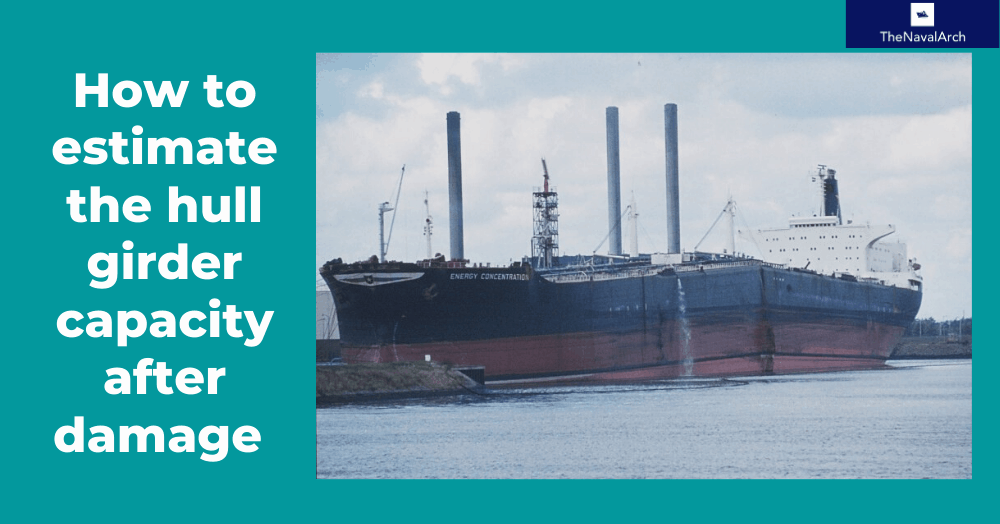
The importance of ULS (Ultimate Longitudinal Strength) and how to assess it for a damaged hull
by Alessandro La Ferlita, Naval Architect Ultimate hull girder strength represents the maximum capacity, of the hull girder beyond the structure fails. In fact, if the vertical bending moment applied overcomes a certain maximum value, the ship can collapse (Figure 1)...
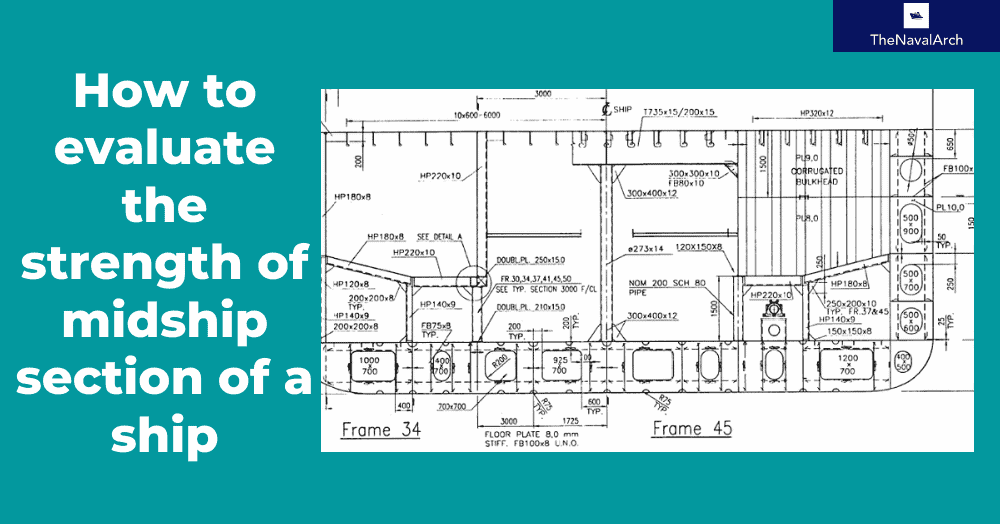
How to calculate the strength of Midship Section of a Ship
The mid-ship section of a ship is a defining structural drawing of the vessel. It represents the most critical structural parameter of the vessel – its global strength. To assess how much of the bending moment (hog and sag) the vessel can tolerate, it is important to...
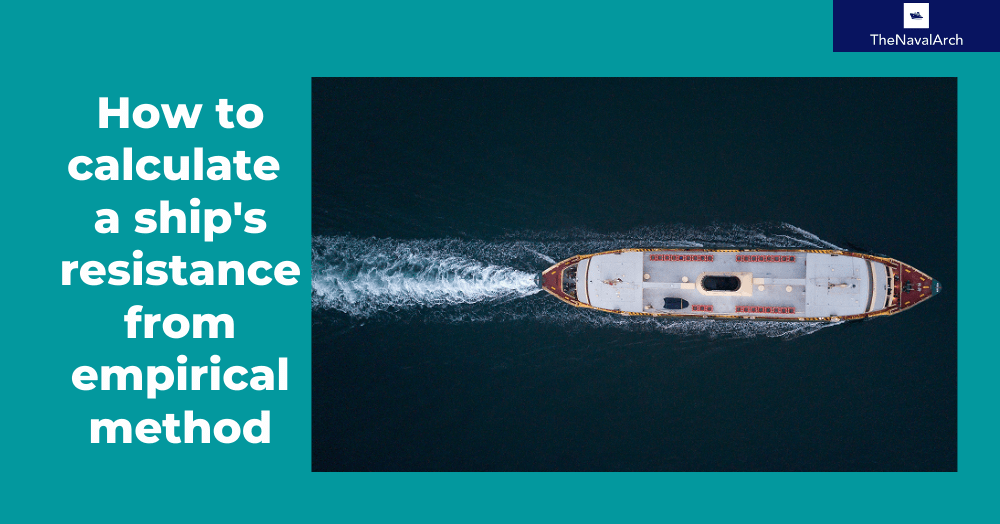
How to use empirical formulas to estimate the resistance of a Ship
How to use empirical formulas to estimate the resistance of a Ship Resistance estimation holds immense importance in the design stage of a vessel. Based on the results of the resistance estimation of a vessel, the selection of the right propulsion system is done....
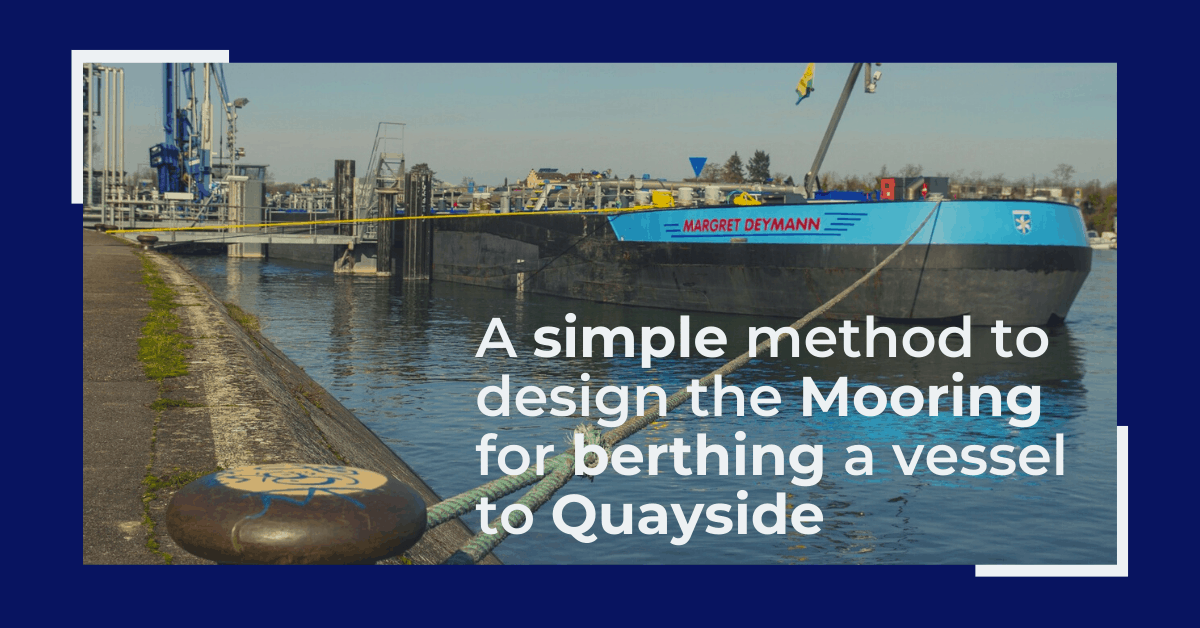
Designing the berth mooring of your vessel with this simple yet effective method
A vessel at berth experiences much lower forces compared to a vessel in the open sea due to the milder environment, but it still requires a mooring configuration suited to the forces it experiences, and also suitable for the type of berthing configuration adopted. The...

Bulbous Bows – History and Design
by Bijit Sarkar, Naval Architect Introduction The eternal search of a naval architect – a perfect bow. Sadly, it never exists. Different bow forms are good for different types, sizes of vessels and seaways. What does a naval architect want out of the bow he designs?...
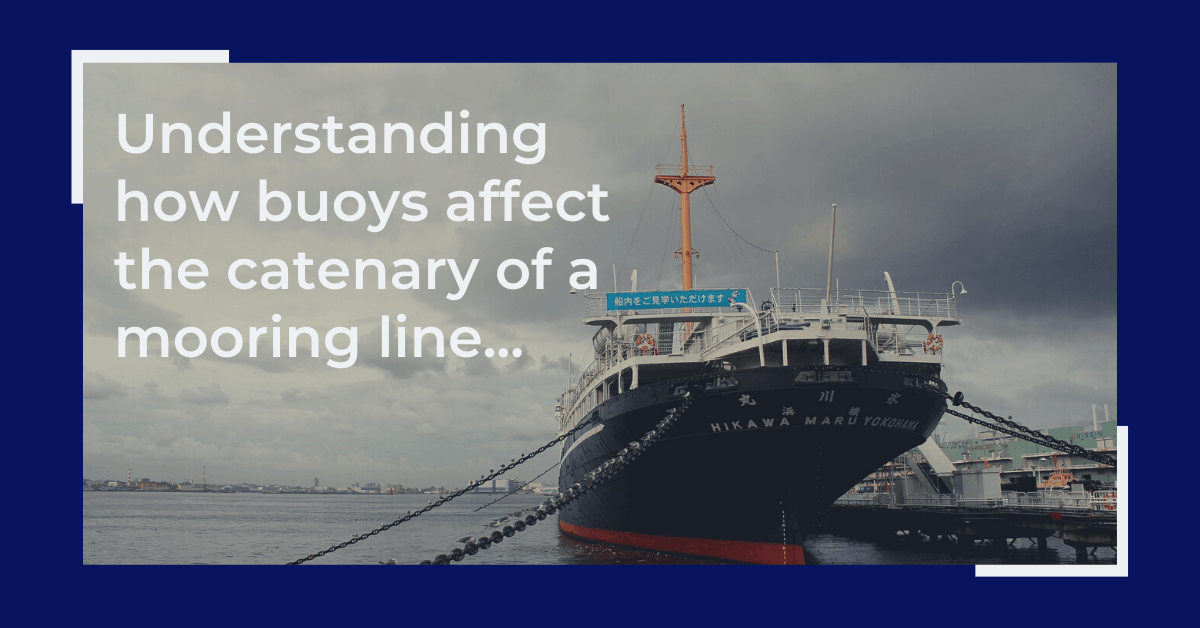
Understanding how buoys affect the catenary of a mooring line
What is a mooring line? Mooring lines generally comprise ropes, wires, chains or combination of wire and chain used to keep ships, offshore platforms and other floating vessels in position. It connects the structure either to the seabed using an anchor or the quay...
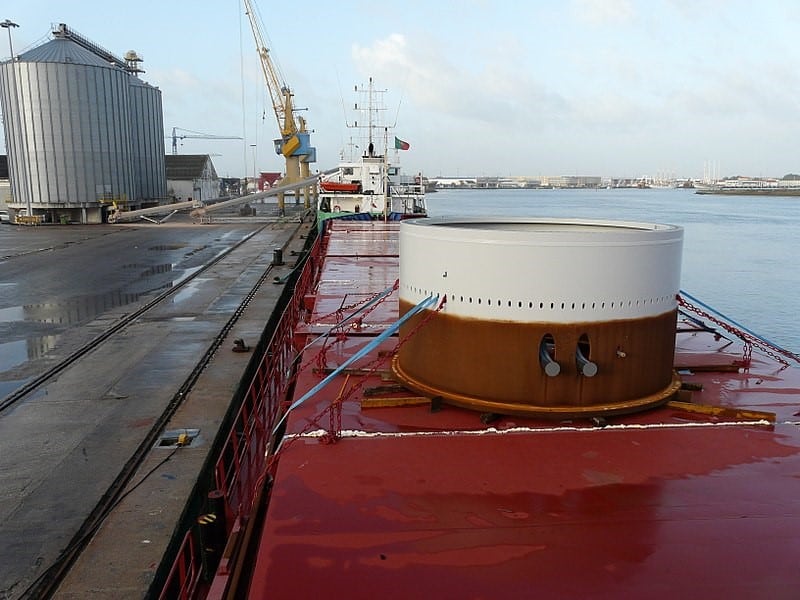
Calculating forces on a ship’s deck cargo – a simplified approach
A cylindrical deck cargo (Source: Wikimedia) Introduction A ship’s deck is used to transport many different types of cargo – from containers to large structures like cranes or heavy modules of an offshore production plant. During transport, the ship suffers from...
Designing a pad-eye: little items with big intricacies
Pad-eyes are one of the smallest and most universally used structural items in the maritime and Oil & Gas industry. They are used for a variety of purposes too: from a simple seafastening of a cargo to deck of a vessel, to complicated lifting operations involving...

I have aready registetred!